Recover at home
Continue rehabilitation in a familiar environment, where suitable.

Physiotherapy Clinic
Expert care closer to home · Flexible · Convenient · Person-centred
Physiotherapy in your home or community to help you recover, maintain mobility and remain as independent as possible.
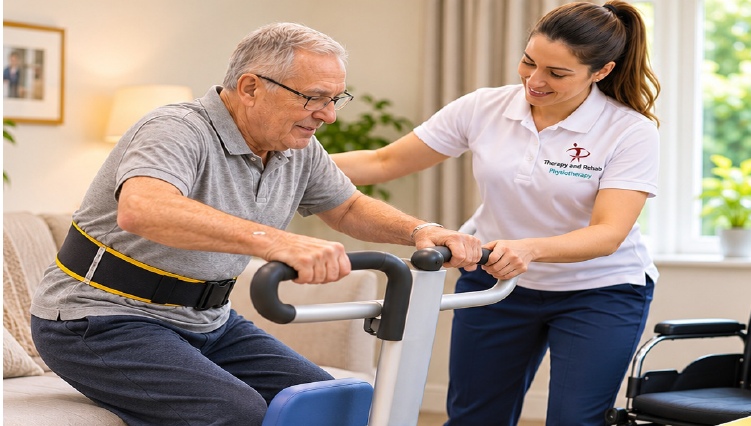
A physiotherapy service delivered in your own home or another suitable community setting when this is appropriate for your needs.
Receiving physiotherapy at home can make it easier to work on the activities that matter in your own environment. Your physiotherapist can consider your mobility, daily routine, home layout and personal goals when planning your rehabilitation.
Continue rehabilitation in a familiar environment, where suitable.
Work towards greater confidence with everyday activities.
Address transfers, walking and household activities in context.
A programme shaped around your needs, abilities and goals.
We will discuss whether a home or community appointment is suitable and agree the most appropriate approach following an individual assessment.
Home and community physiotherapy may be helpful when a person’s health, mobility, circumstances or rehabilitation goals make a clinic appointment difficult or less suitable. The service is considered individually; it is not necessary to have a particular diagnosis to enquire.
People who have become weaker, less mobile or less confident following an illness, operation or prolonged hospital admission. Rehabilitation may focus on rebuilding strength, balance, walking and everyday function.
People who need support to regain movement and function at home, taking account of surgical instructions, precautions and advice from their treating team.
People who find travelling, using transport, managing stairs or getting in and out of a building difficult.
People who would benefit from assessment of balance, walking, strength, transfers and confidence with everyday movement.
People living with musculoskeletal, neurological or other long-term conditions where physiotherapy input may help address mobility, physical function or self-management goals.
People who want to work on practical tasks such as getting out of a chair, moving around the home, using stairs, getting in and out of bed or accessing the garden.

A home visit may be appropriate if the environment is suitable and the physiotherapist can safely provide the required assessment and treatment. Some rehabilitation goals may be better addressed in a clinic or another setting. We can discuss your circumstances before arranging an appointment.
We may ask a few questions about access to your property, stairs, parking, available space and any equipment you use so that the visit can be planned appropriately.
Where appropriate, exercises and functional practice can be linked to the activities and challenges you experience every day.
Your physiotherapist will work with you to understand what is difficult, what you would like to achieve and how rehabilitation can fit into your everyday life.
The assessment may include discussion of your medical history, symptoms, medication, previous treatment, current mobility and personal goals. With your consent, your physiotherapist may assess relevant movement, strength, balance, transfers, walking and functional activities. The home environment may also be considered where it affects safety or independence.
Your assessment may consider:
Moving around indoors and outdoors, walking aids and transfers.
Relevant muscle strength, endurance and physical capacity.
Balance, coordination and confidence where appropriate.
Getting up, stairs, bed mobility and other meaningful activities.
Following the assessment, your physiotherapist will discuss the findings and agree priorities with you. Your plan may include:
Individually selected exercises to address strength, movement, flexibility and endurance.
Supported practice of walking and movement, with appropriate walking aids where indicated.
Practising relevant tasks such as sit-to-stand, bed mobility and moving between surfaces.
Exercises and advice where appropriate to improve balance, confidence and safer movement.
Guidance for you and, where appropriate, your family or carers on exercise, pacing, positioning and managing day-to-day activity.
Recommendations or signposting may be discussed if additional equipment, assessment or input from another service appears necessary.
We provide physiotherapy across West Yorkshire, with clinics in Leeds, Wakefield and Batley, as well as home and community appointments where available and appropriate.
You can enquire directly. If you have been given specific instructions or precautions by your hospital or medical team, please share these with us.
Home physiotherapy may be suitable after hospital discharge, depending on your medical stability, needs, goals and the suitability of the home setting. Please contact us to discuss your circumstances.
Your physiotherapist can assess your current mobility and discuss appropriate goals. Rehabilitation may begin with bed mobility, transfers, standing or short-distance movement if clinically suitable.
The equipment required depends on the assessment and treatment planned. Please tell us about any equipment you already use. We will discuss what is needed for your appointment.
Yes, if you wish. Their involvement can be helpful, particularly when discussing daily activities, support needs and an exercise programme.
This varies according to your needs, goals and progress. Your physiotherapist will discuss a suitable plan and review it as your circumstances change.
Yes. Appointments are available at our clinics in Leeds, Wakefield and Batley, subject to availability and suitability.
Important information: This leaflet provides general information and does not replace an individual clinical assessment or medical advice. Treatment recommendations depend on your presentation and relevant clinical guidance.
Read or save our four-page patient information leaflet for this service.
Download the Community and Home Physiotherapy patient information leaflet (PDF)
Contact Therapy and Rehab to discuss whether a home or community physiotherapy appointment may be suitable for you.