Strength
Reduced muscle strength, making it harder to stand up, climb steps or carry out daily tasks.

Physiotherapy Clinic
Rebuilding strength, confidence and everyday independence – at a pace that is right for you.
Leaving hospital is an important milestone. After a long stay, though, you may find that everyday activities take more effort than before. You might feel weaker, less steady on your feet, more tired, or less confident moving around. Physiotherapy can help you understand your current abilities, work towards meaningful goals and develop a plan for recovery. We look at the person as a whole – not simply the time spent in hospital or a diagnosis.
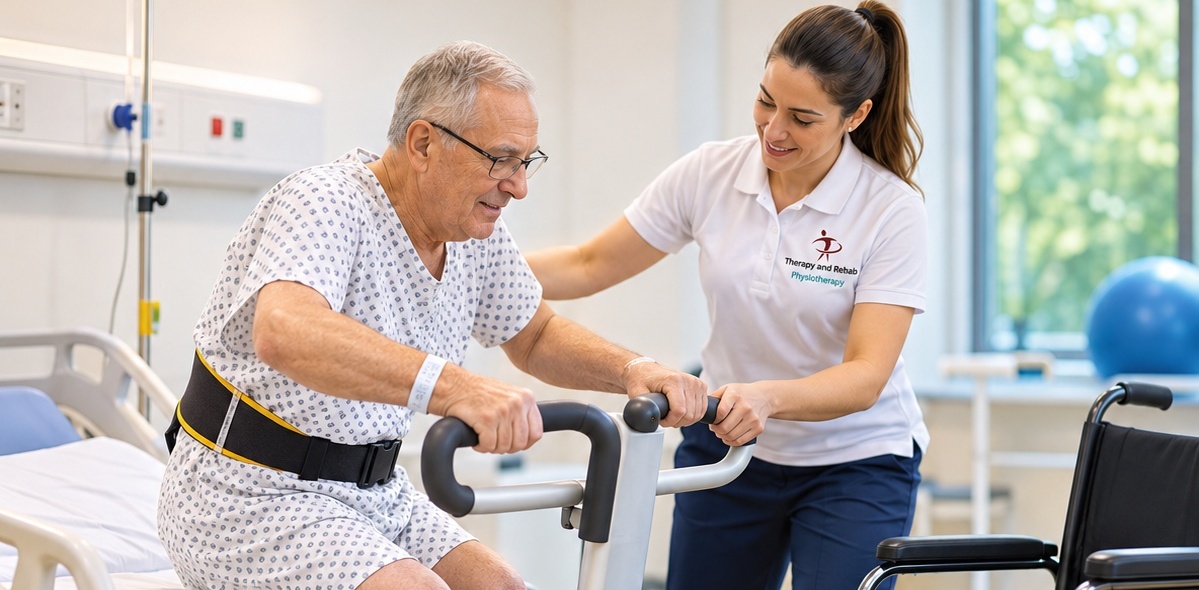
Rebuilding everyday movement with the right support, equipment and a programme shaped around your needs.
Your starting point is individual. Physiotherapy is adapted to your health, current abilities, goals and the advice of your wider healthcare team.
We begin by understanding what matters to you, what has changed and what support may be helpful now.
A period of illness, reduced activity or time in hospital can affect several aspects of physical function. The changes are different for everyone and may include:
Reduced muscle strength, making it harder to stand up, climb steps or carry out daily tasks.
Getting tired more quickly or needing longer periods of rest.
Feeling less steady, cautious or worried about falling.
Difficulty walking, changing position, getting in and out of bed or moving around the home.
Stiffness or reduced movement after periods of inactivity or surgery.
Needing more help with activities that were previously manageable.
Your physiotherapist will take time to understand your recent hospital stay, current health and what you would like to achieve. The assessment may include:
The findings help your physiotherapist identify appropriate priorities and agree a rehabilitation plan with you. The plan may change as your health, confidence and abilities improve, or if further assessment or medical advice is needed.
We do not assume that everyone needs the same exercises or the same length of treatment. Your programme is individual and should reflect your clinical presentation and circumstances.
Depending on your assessment and what is safe and appropriate, rehabilitation may include a combination of the following:
Practising bed mobility, sitting, standing, transfers and walking. We can work on making movement more controlled and building confidence with everyday tasks.
Individual exercises to work on strength and the physical capacity needed for activities that matter to you. Exercises are progressed in line with your response and abilities.
Where appropriate, exercises and practical strategies to improve balance, steadiness and confidence when moving around.
Working on walking ability, walking pattern, distance, turning and use of prescribed or recommended walking aids where appropriate.
A graded approach to increasing activity, with attention to fatigue, rest and recovery. The aim is to help you manage activity more confidently.
Appropriate movement exercises to address stiffness or restrictions that may be affecting function.
Planning how to practise useful activities at home, pace activity and continue appropriate exercises between appointments.
Rehabilitation is not a race. Some days may feel easier than others, and rest and recovery are part of a sensible plan.
Your physiotherapist will monitor how you respond and adapt the programme accordingly, particularly when fatigue or other health conditions are present. Your programme may be reviewed and progressed as your function changes. If your presentation suggests that another healthcare professional or service should be involved, this can be discussed with you.
Therapy and Rehab offers appointments at our clinics and, where available and appropriate, home and community visits. The most suitable setting will depend on your needs, mobility, clinical presentation and location.
Appointments at our clinics in Leeds, Wakefield and Batley.
Assessment and rehabilitation in your own environment may be considered when travelling to a clinic is difficult or when practising everyday activities at home is particularly helpful.
When you contact us, please tell us about your recent hospital stay, current mobility, any relevant precautions and the type of support you are looking for.
As soon as your medical condition is stable and it is appropriate to do so. Your discharge advice, medical condition and any precautions should guide when and how rehabilitation begins. If you are unsure, speak to your healthcare team before starting.
Physiotherapy can help you work towards improving strength, stamina, balance, mobility and confidence with everyday activities. The extent and pace of progress vary from person to person.
Home and community visits may be available. Please contact us as early as possible to discuss your needs, location and availability.
Recovery varies according to your health, the effects of your hospital stay, your starting abilities and your goals. Some people need a shorter period of support; others may benefit from a longer and more comprehensive programme. Your physiotherapist will review progress and adapt your programme.
Read or save the four-page patient information leaflet for this service.
Download the Physiotherapy After a Long Hospital Stay patient information leaflet (PDF)
Important information: This leaflet provides general information about our physiotherapy service. It does not replace medical advice, discharge instructions or an individual assessment. Please follow any restrictions or precautions given by your hospital or medical team.
If you would like to discuss your needs or whether this service is suitable, contact Therapy and Rehab.
Telephone: 07908 331234
Email: info@therapyandrehabphysiotherapy.com